
Choosing the right blackout curtains comes down to three decisions: how much light your room actually needs to block, which fabric gets you there, and getting the size right so light doesn’t sneak in around the edges. Get those three right and everything else, color, pattern, header style, is just personal taste.
How Much Light Blocking Does Your Room Actually Need?
Not every room needs the same level of darkness, and “blackout” isn’t one fixed number. Curtains are generally sold in three tiers:
| Tier | Light Blocked | Best For |
|---|---|---|
| Light-filtering | 40-60% | Kitchens, home offices, rooms where you still want daylight |
| Room-darkening | 95-99% | Most bedrooms, living rooms with a TV or screen |
| True blackout | 99-100% | Nurseries, night-shift sleepers, home theaters |
A true 99-100% claim only holds up if the curtain covers the full window with no gaps. Even the densest fabric will leak light around the sides if the panel is too narrow or the rod sits right against the frame. Fit matters as much as fabric here, which is why we cover sizing separately below.
If you want the highest blocking power without guessing at fabric weight, foam-backed blackout curtains are built specifically for this tier.
Match Your Room to the Right Curtain
Each room has a different job for its curtains. A living room cares about glare and style. A nursery cares about consistency and safety. Use this as a starting point, then adjust for your own light exposure.
| Room | Main Priority | Blackout Level | Best Fabric |
|---|---|---|---|
| Bedroom | Sleep quality | Room-darkening to true blackout | Velvet, foam-backed |
| Kids’ Room | Consistent naps, safety | True blackout | Foam-backed, cotton |
| Living Room | Screen glare, style, furniture protection | Room-darkening | Velvet, linen-blend |
| Home Office | Reduce screen glare without losing all daylight | Light-filtering to room-darkening | Linen-blend, cotton |
| Guest Room | Flexibility for different sleep schedules | Room-darkening | Cotton, polyester |
| Kitchen | Light control without full darkness | Light-filtering | Cotton, polyester |
A bedroom that faces east and gets hit with direct morning sun needs a denser fabric than a north-facing room with the same square footage. Sun exposure matters more than room type alone.
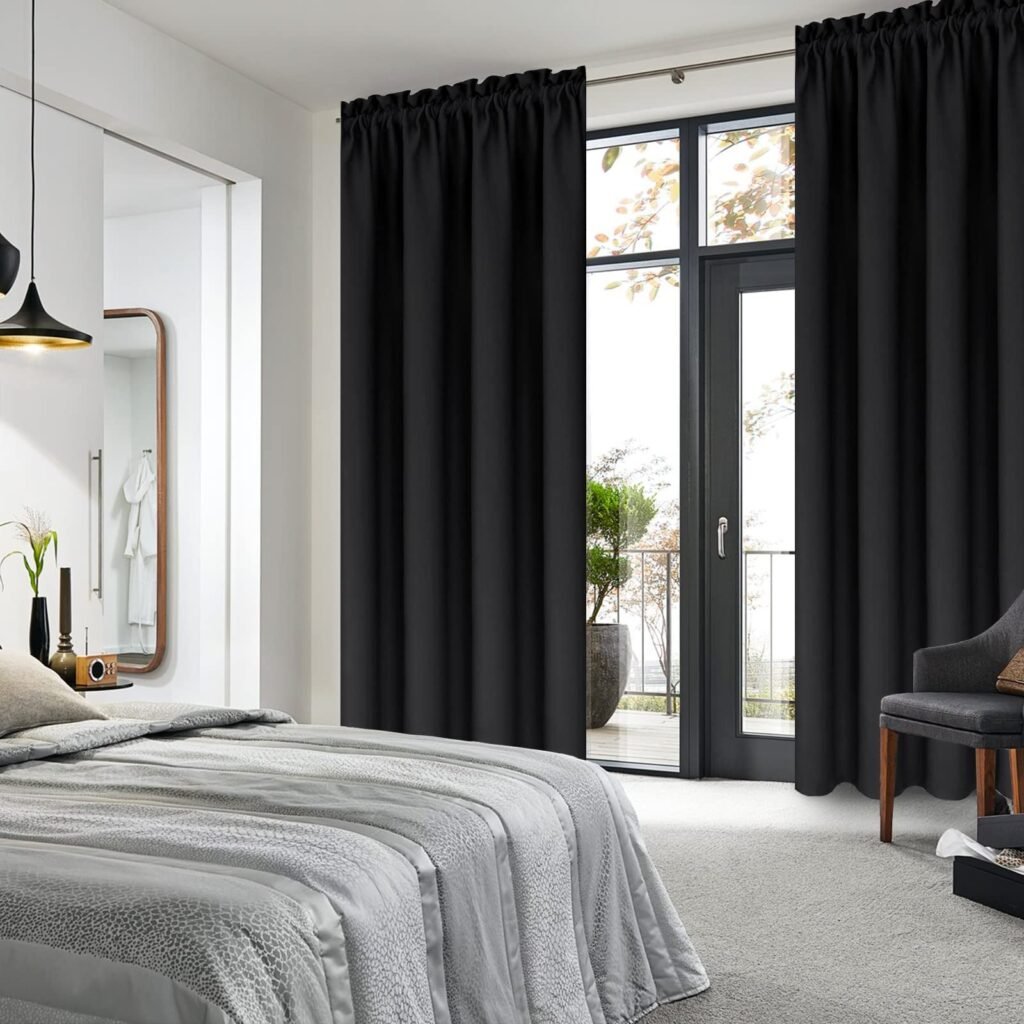
Choosing the Right Fabric
The fabric does most of the work. Here’s how the main options compare.
Velvet. Thick, tightly woven, and naturally light-blocking without needing a separate lining. Velvet also absorbs sound better than lighter fabrics, so it helps in rooms that face a street or a shared wall. The tradeoff is weight, velvet panels are heavier and need a sturdier rod. Good for bedrooms and living rooms where you want both darkness and a more formal look. Browse velvet blackout curtains.
Foam-backed. A foam layer bonded to the back of the fabric is what gets you closest to 100% light blocking, and it adds thermal insulation too. This is the practical choice for night-shift workers, nurseries, or anyone in a room with strong direct sun. Browse foam-backed blackout curtains.
Cotton. Breathable and easy to live with day to day. Cotton blackout curtains won’t hit true 100% blackout on their own as reliably as velvet or foam-backed, but they’re a solid middle ground for rooms where you want darkness without the room feeling heavy. Browse cotton blackout curtains.
Linen-blend. The most natural-looking option, with a soft texture that works well in living rooms and home offices where style matters as much as function. Linen-blend curtains generally sit in the room-darkening range rather than true blackout. Browse linen-blend blackout curtains.
Polyester. Durable, affordable, and low-maintenance. Polyester blackout curtains hold their shape well and resist fading better than natural fibers, which makes them a practical pick for guest rooms or budget-conscious buyers. Browse polyester blackout curtains.
Choosing the Right Header Style
The header, how the curtain attaches to the rod, affects both the look and how easy the curtains are to open and close.
- Eyelet (grommet-top): Metal rings let the fabric glide smoothly along the rod. Clean, modern look, easiest to operate daily.
- Rod pocket: A simple fabric channel slides directly onto the rod. Classic look, but the curtain doesn’t slide as freely, better for panels you won’t open and close often.
- Pinch pleat: Tailored, formal pleats at the top. Works well in living rooms or dining areas where you want a more polished, structured look.
If you’re unsure, eyelet is the safest default for bedrooms and any room where you’ll be opening and closing the curtains regularly.
Getting the Size Right
Undersized curtains are the single biggest reason “blackout” curtains fail to actually block light. Two numbers matter: width and length.
Width. For a curtain to look full (not stretched flat) and to fully cover the window with no gaps, multiply your window’s width by 1.5 to 2. A 40-inch-wide window needs curtain panels totaling 60 to 80 inches across. If you’re buying a pair, that’s 30 to 40 inches per panel.
Length. Measure from where you’ll mount the rod down to where you want the curtain to end. For a true blackout effect, mount the rod 4 to 6 inches above the window frame and extend it 4 to 6 inches past each side of the frame. This lets the curtain cover the wall space around the window instead of just the glass, which closes off the gaps where light usually leaks in.
If your curtains will hang close to the floor, leave about half an inch of clearance so they don’t drag. For a fuller, more dramatic look, some people let the fabric just touch or slightly pool on the floor, but that’s a style choice, not a blackout requirement.
Common Mistakes That Let Light Leak In
- Panels too narrow. If the curtain barely covers the window itself, light comes in around both sides no matter how thick the fabric is.
- Rod mounted right against the frame. This leaves almost no side coverage. Extend it past the frame as described above.
- Skipping the extended rod. A rod that’s the same width as the window means the curtain can only cover the window, not the wall space beside it.
- Assuming color equals darkness. A dark color doesn’t block more light than a light color if the fabric weave and lining are the same. Blocking power comes from fabric density and construction, not color.
Blackout Curtains vs. Room-Darkening Curtains
| Blackout | Room-Darkening | |
|---|---|---|
| Light blocked | 99-100% | 95-99% |
| Best for | Nurseries, shift workers, home theaters | Most bedrooms, living rooms |
| Fabric type | Foam-backed, heavy velvet | Cotton, linen-blend, lighter velvet |
| Feel in the room | Fully dark, no ambient glow | Dim, small amount of soft light |
Neither is “better” outright. A room-darkening curtain is often the right call for a bedroom where total pitch-black isn’t necessary, while true blackout makes more sense for a baby’s nap schedule or a home theater.
FAQs
1. Do blackout curtains block 100% of light?
Only if the fabric is dense enough and the panel is sized to cover the full window with extra width and an extended rod. Fabric alone rarely gets you to 100%, fit closes the remaining gaps.
2. What’s the best fabric for true blackout?
Foam-backed fabric blocks the most light because of its bonded lining, followed closely by heavyweight velvet.
3. Can I layer blackout curtains with sheers
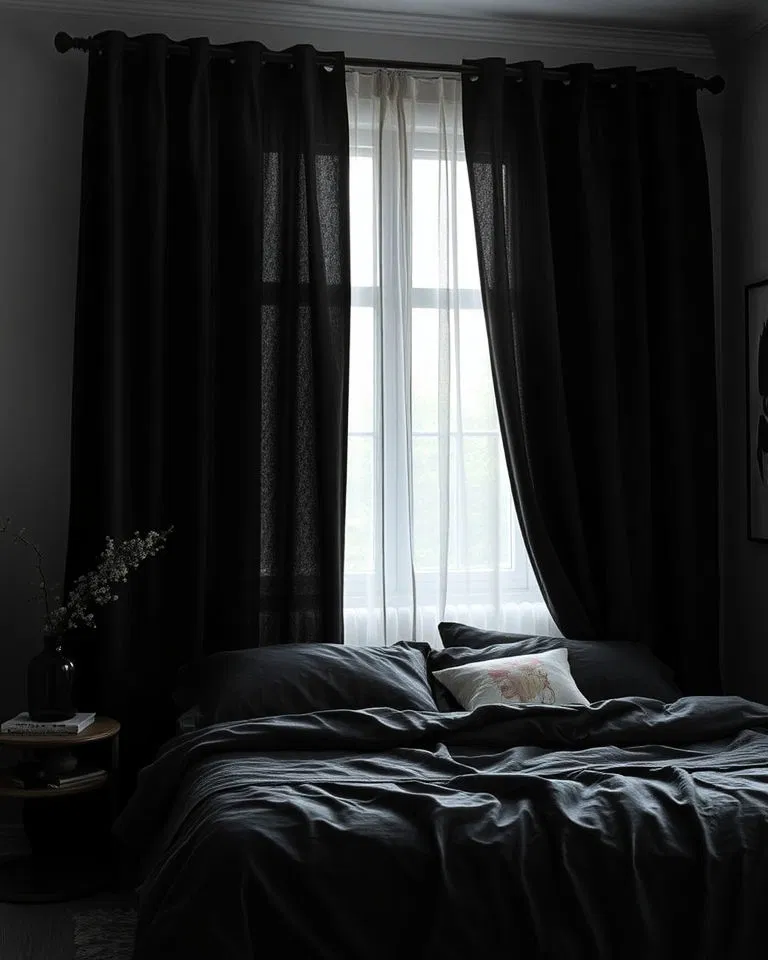
Yes. Mounting a sheer curtain on an inner rod and a blackout curtain on an outer rod lets you switch between soft daylight and full darkness depending on the time of day.
4. Do darker colors block more light than lighter ones?
No. Light blocking comes from the fabric’s weave density and any backing or lining, not the color. A light-colored foam-backed curtain will out-block a dark, thin one.
5. How many panels do I need per window?
Most standard windows need two panels (a pair) for full coverage and a gathered look when closed. Very wide windows may need three or four panels total.
Ready to find the right fit for your room? Browse our full blackout curtain collection or filter by fabric, room, or style to narrow it down.
