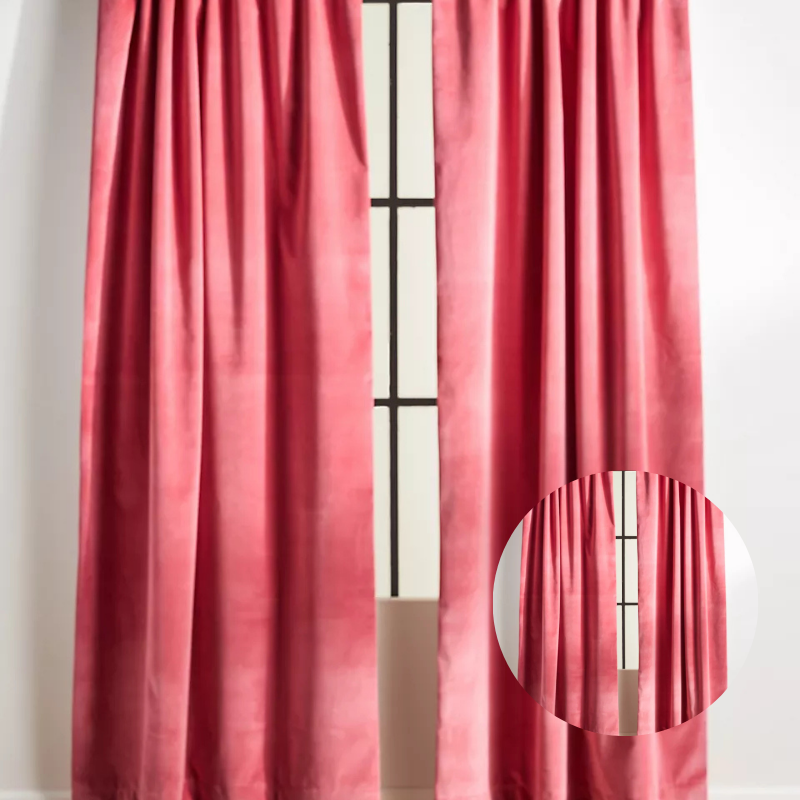
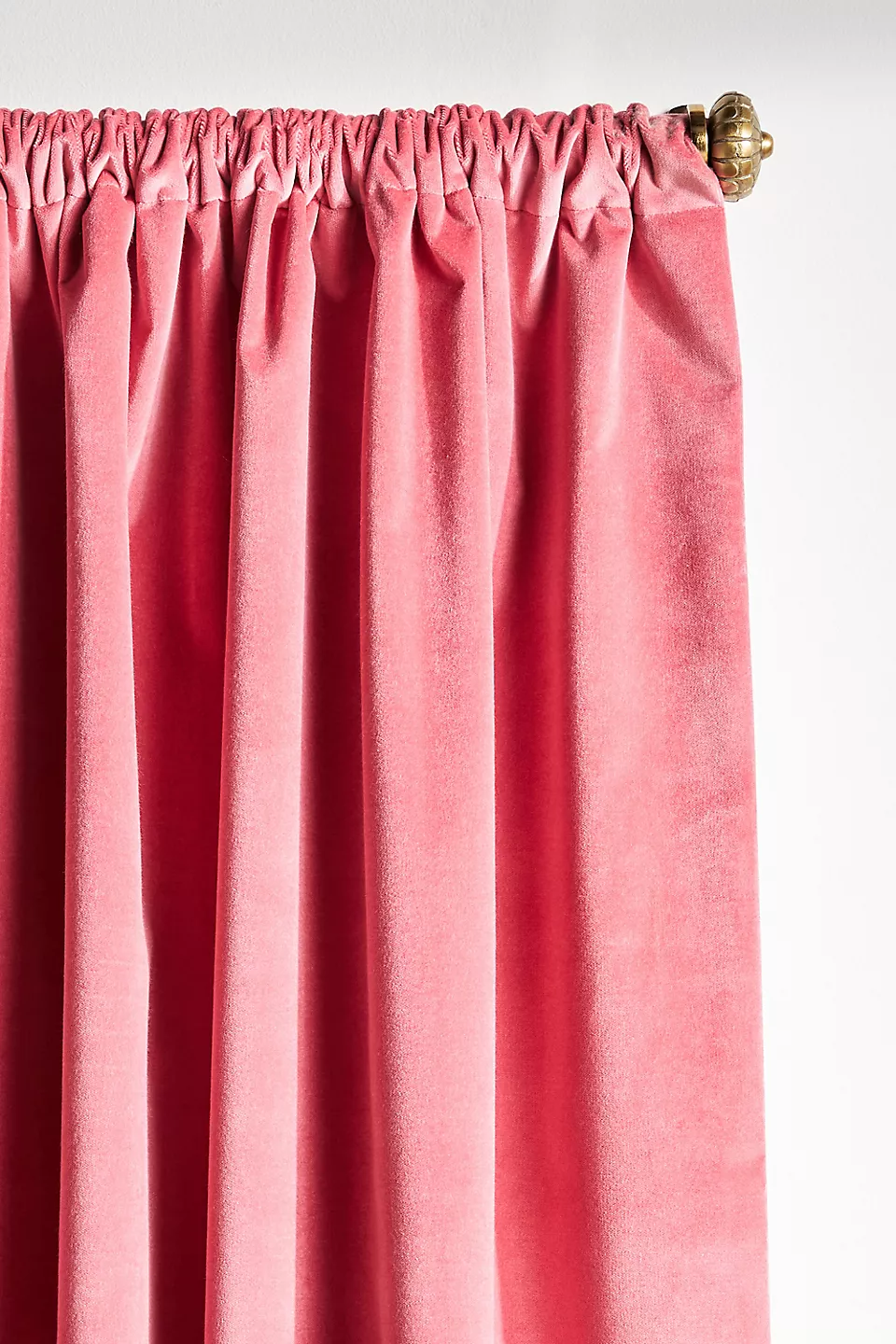
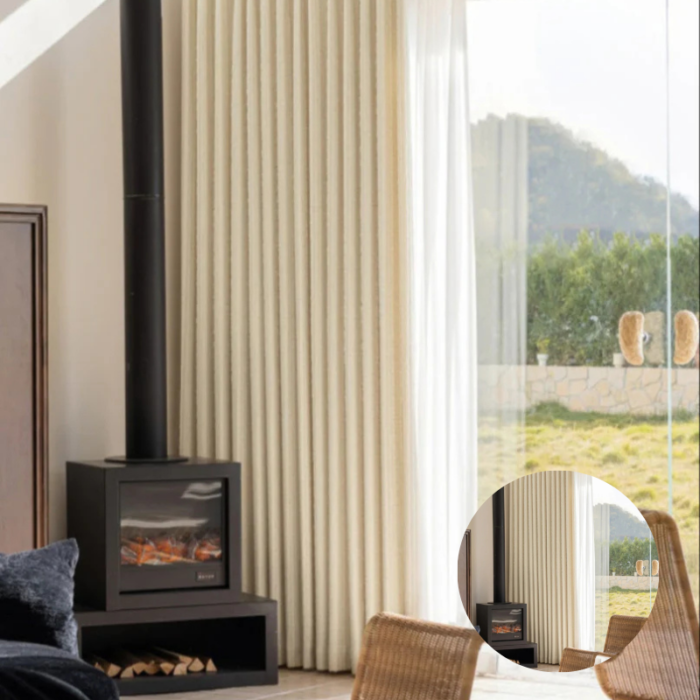
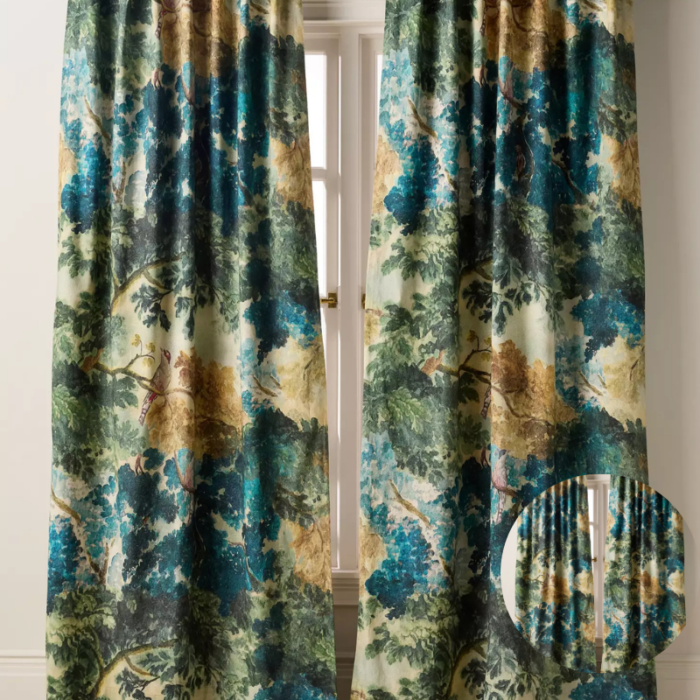
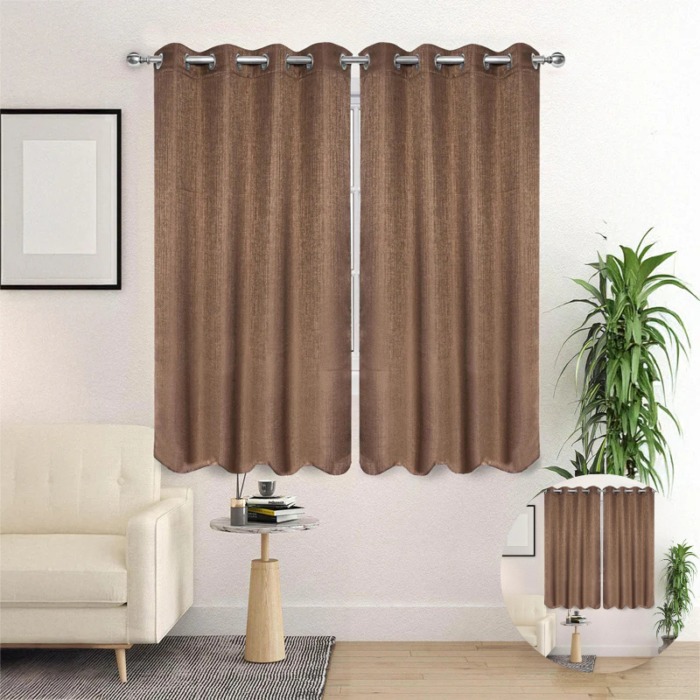
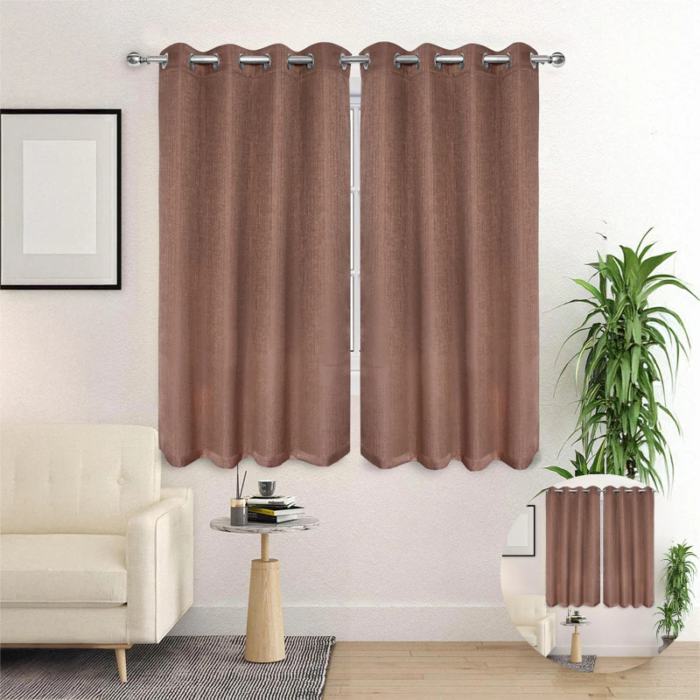
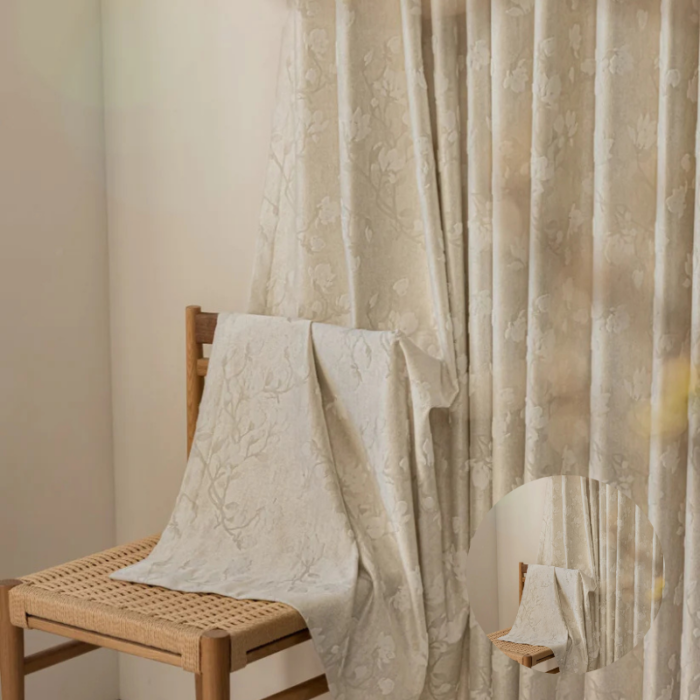
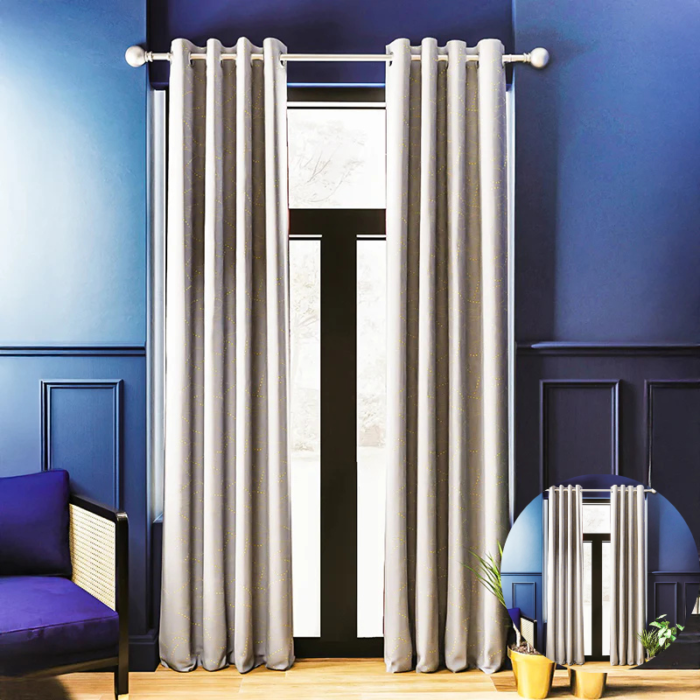
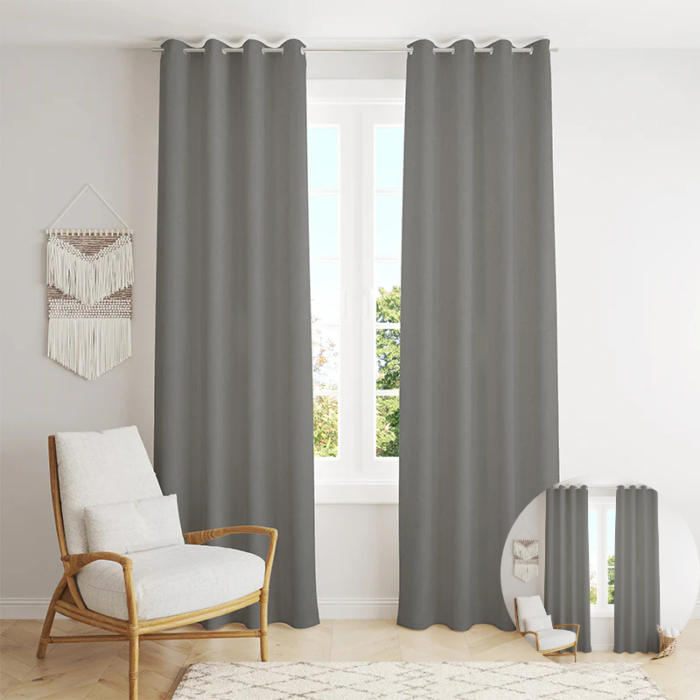
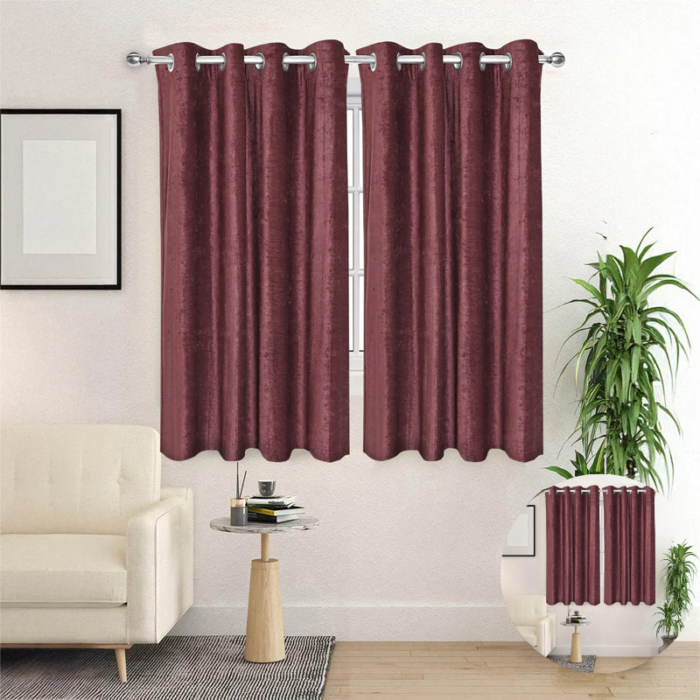
Most velvet curtains shine. This one doesn’t. A cotton-poly blend with a true matte face and a blackout lining sewn behind it, so the room goes dark at 6 a.m. and the fabric still looks like fabric, not plastic, under a lamp at 9 p.m.
$110.00
The matte thing is real, no weird shine under the lamp. Hangs heavy which I like. Took about two days for the shipping folds to relax, steamed them and that helped. Only note is they're heavier than I expected so my cheap rod was sagging a little in the middle, added a center bracket and it was fine.
Desk is in my living room so afternoon glare on video calls was a constant problem. These killed it completely. Bonus that the room stops looking like an office once the laptop closes. Color was a bit deeper in person than on my monitor, honestly I prefer it.
Solid curtain, good weight, doesn't flap around near the vent like the old ones did. Wish there was a longer length option, ours sit maybe an inch above the floor and I'd have preferred a slight break. Not enough to send back.
There’s a specific kind of disappointment that comes with buying velvet curtains online. They arrive, you hang them, and under the ceiling light they have a wet-looking shine that makes the whole room read cheaper than it did before. That’s almost always a 100% polyester velvet. The cotton in this blend is what kills the shine. The pile sits flatter and absorbs light instead of bouncing it, which is why it stays matte in daylight and stays matte at night.
Behind that face fabric is the part that does the actual work: a blackout lining, sewn in rather than clipped on, so there’s no separate liner to buy, hang, or misalign. The velvet gives you texture, color depth, and weight at the window. The lining gives you the dark room. Together they hang heavier than a linen or poly-blend panel of the same dimensions, which is mostly a good thing: less billowing when the heat kicks on, cleaner folds when the panel is stacked open, and a hem that actually sits where you put it instead of curling.
For a bedroom, size the panel wider than the window frame itself, since most of the light people complain about after buying blackout curtains is leaking in around the sides, not through the fabric. Velvet holds shipping folds longer than lighter fabrics, so hang it and give it 48 hours before you make a judgment about the drape.
Velvet is a texture decision before it’s a color decision, and the matte finish changes where this panel works compared to a glossier one.
Bedroom, where most of these end up. Hang the rod 4 to 6 inches above the frame and take the panel to the floor or just past it. Matte velvet pairs better with aged brass, warm bronze, or matte black hardware than with polished chrome, which reads cold and slightly clinical against a soft pile. Against a warm white or greige wall the whole thing looks considered. Against a stark, cool white wall, the same panel reads heavy and a little severe, so if the room is already short on natural light, warm the wall color up before you blame the curtain.
Living room, particularly one that doubles as a workspace. A lot of one-bedroom and open-concept setups have the desk in the living room, and the two problems are glare on the screen in the afternoon and a room that never stops looking like an office. Velvet solves the second one better than almost anything else at this price, because the eye reads texture as “finished.” Hang it high and let the vertical line pull attention up off the monitor and cables. In an open floor plan where you can see the living room from the kitchen, that vertical break also gives the seating area a defined edge.
Where it earns the most and gets used the least: a nursery or a guest room that needs to go dark mid-day. Same blackout lining, and velvet’s weight means less fabric movement when a door opens, which matters more with a sleeping baby than anyone tells you before you have one.
On color behavior: velvet shifts noticeably between light sources. In daylight the matte finish reads deeper and more neutral. Under warm-white or incandescent bulbs at night, the pile picks up an amber cast and the color warms by a degree or two. If you’re matching it to a sofa or a rug, look at it in both conditions before you commit, especially on a south- or west-facing window.
One thing to know going in: a lined velvet panel does not have the loose, drifting movement of an unlined curtain. It hangs with structure and stays where you leave it. That’s the tradeoff for the weight and the light control.
Treat this more like a garment than a window covering. The velvet face and the blackout lining are two different fabrics sewn together, and most damage comes from cleaning one without thinking about the other.
Spot cleaning. Blot, don’t rub. A damp white cloth with a small amount of mild detergent handles most marks. Rubbing crushes the pile and leaves a flat, shiny patch that’s very hard to reverse, worse-looking than the stain you started with.
Full cleaning. Skip the home washing machine unless the care label explicitly allows it. Machine agitation stresses the seams where the lining attaches to the face fabric, and over repeated cycles the two can start to separate or bubble. Professional cleaning is the safer call on a lined velvet.
Steam, never iron. A handheld steamer held a few inches off the fabric relaxes both the pile and the shipping creases. A direct iron flattens the nap permanently in that spot, and unlike a wrinkle, it does not come back. If you don’t own a steamer, hang the panel in the bathroom during a hot shower for 15 to 20 minutes.
The nap trick. Velvet holds folds longer than other fabrics because the pile is directional. Hang the panel as soon as it arrives, even before the room is ready, and run your palm down the fold lines in the direction the pile lies a few times a day. It relaxes creases considerably faster than gravity alone.
Dust before it dulls. Velvet that looks tired is usually dusty, not dirty. A handheld vacuum on low suction with a brush attachment every few weeks keeps the pile from packing down with fine dust, which is what flattens the color over time.
Storage. Roll, don’t fold, if you take these down seasonally. Long-term folds in velvet set into the pile and are much harder to release than shipping creases.

No, and that’s the main reason to pick this over a 100% polyester velvet. The cotton content flattens the pile’s reflectivity, so it holds a matte finish in daylight and under warm bulbs at night.
Yes. This comes up often in feedback, with reviewers specifically contrasting it against shinier velvet panels they’d owned before and noting it doesn’t have that glossy, synthetic look under lamp
No. The blackout lining is part of the panel, sewn in behind the velvet face, so there’s nothing to clip on, align, or replace.
The lining is built to block substantially more light than an unlined or room-darkening panel. Real-world darkness depends just as much on coverage: order the panel wider than your window frame, because side leakage is what most people are actually seeing when they say a blackout curtain “didn’t work.”
Any dyed fabric lightens gradually under years of direct, unfiltered sun. The sewn-in lining helps here, since it sits between the glass and the velvet face and takes most of the UV exposure instead of the color layer.
Bought these for a bedroom that faces east and gets obnoxiously bright around 5:45 in the summer. First morning with them up I slept until my actual alarm for the first time in months. Fabric feels substantial, way nicer than the polyester ones I returned last year.