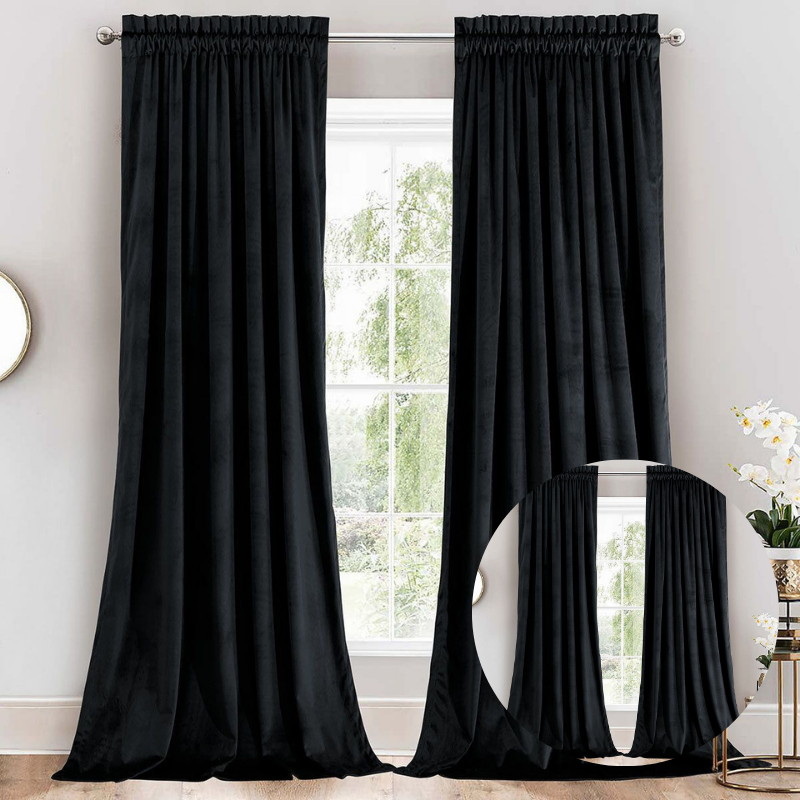
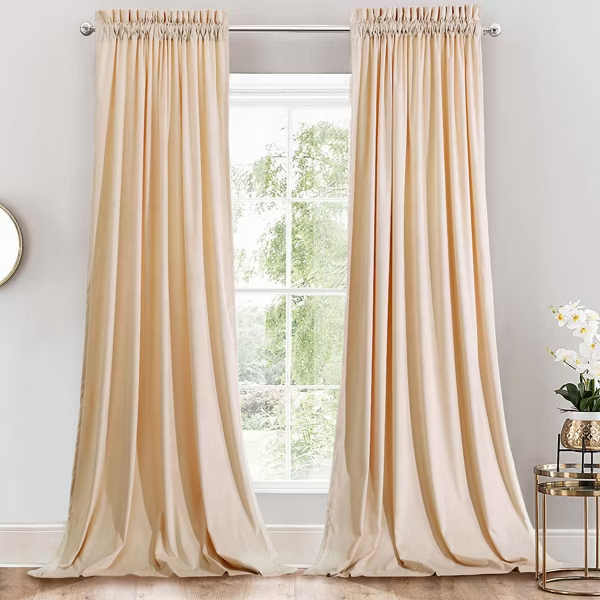
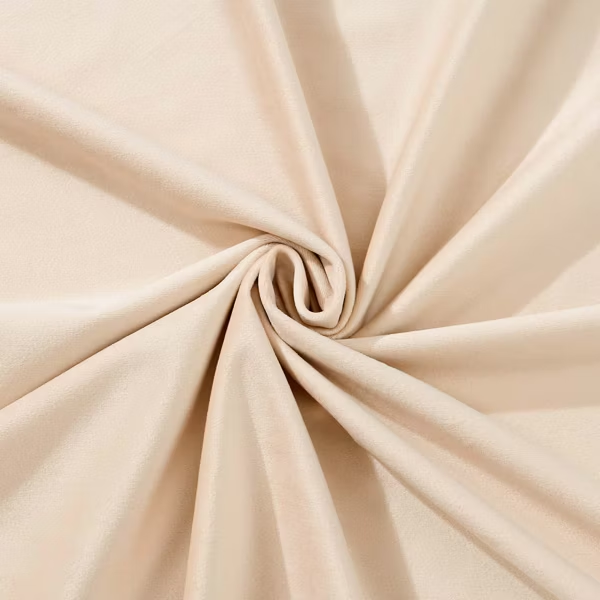
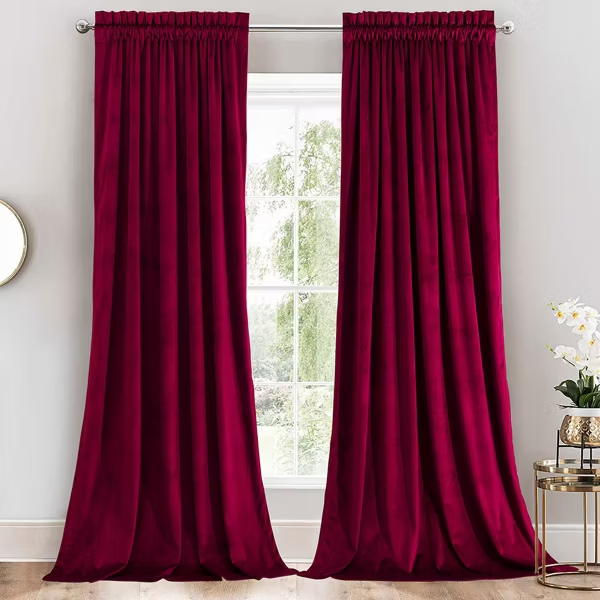
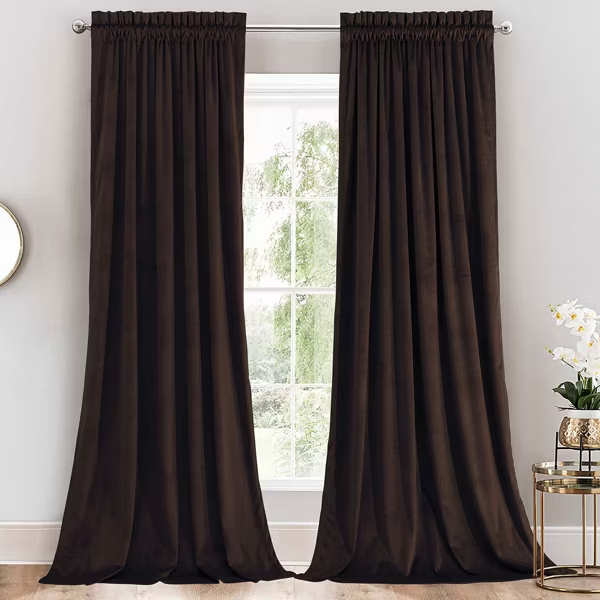
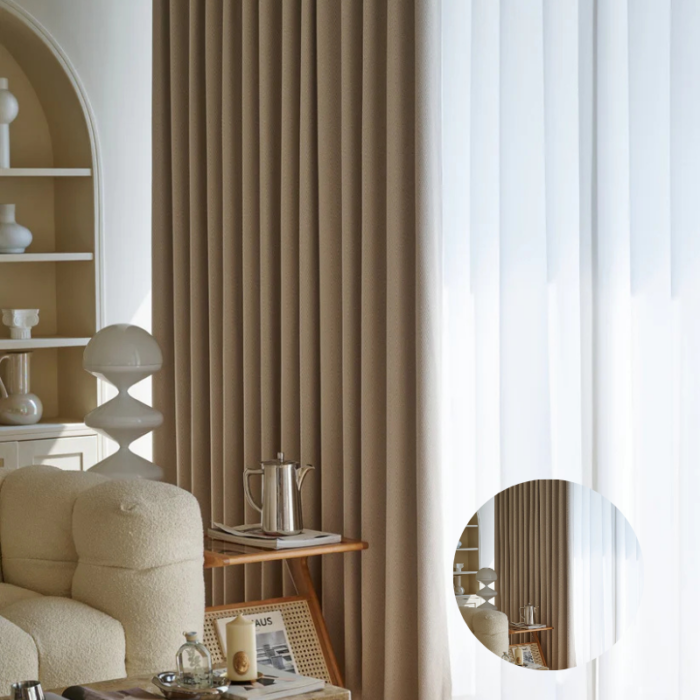
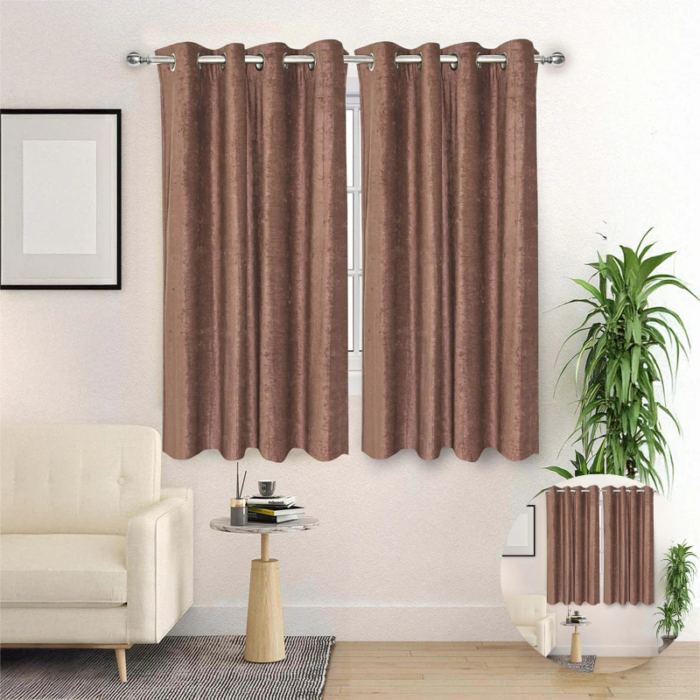
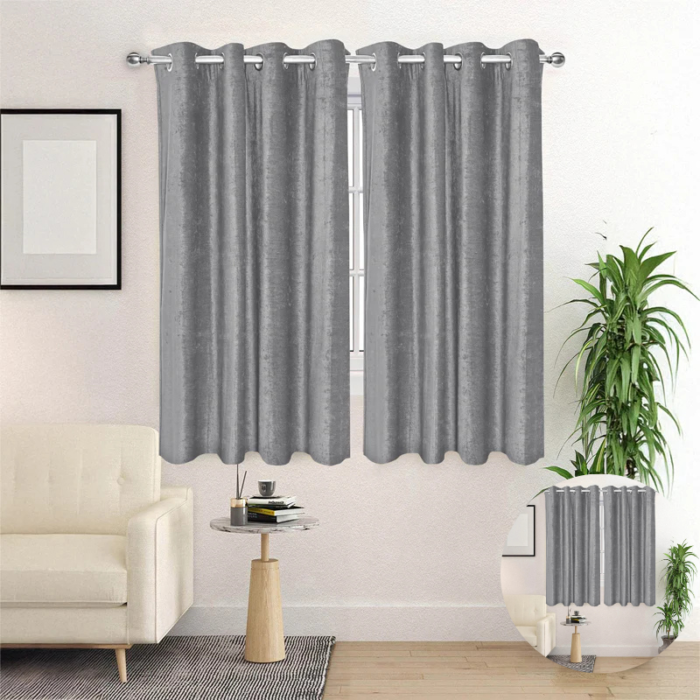
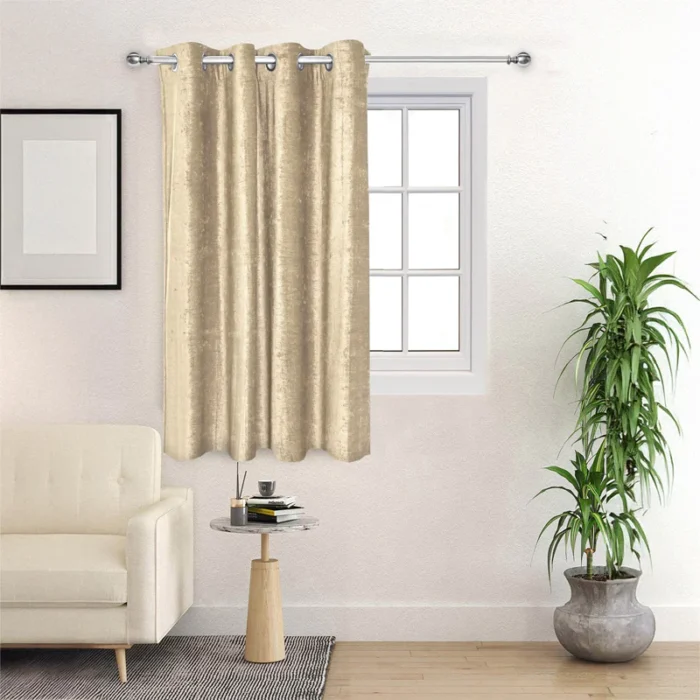
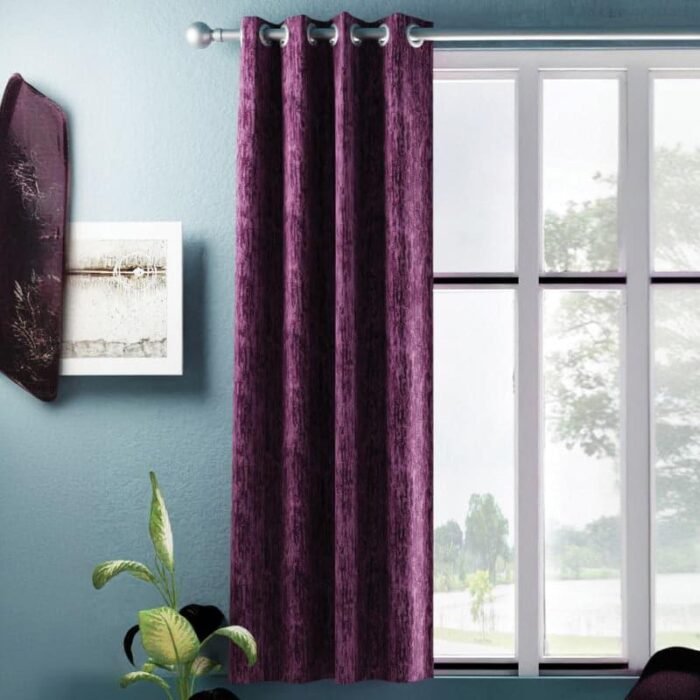
300 GSM is the number worth caring about here. Most curtains at this price hang like a bedsheet; this one has the density to fall straight, stay put, and dim a bedroom to nap-in-the-afternoon dark. Rod pocket header, no hardware puzzle, no drilling.
$32.00
Good weight, hangs straight, room is definitely darker. Not pitch black though so if you need actual blackout this isn't it, they do say room darkening on the listing so that's on me for hoping. Still happy with them for the price.
Ordered two panels per window like the sizing note said and I'm glad I did, they look full instead of stretched flat. Washed one already on cold and hung it back up damp, wrinkles fell right out.
Using these in the nursery for nap time. Dims the room enough that she goes down at 2 without a fight. They're thick enough that they don't blow around when the AC comes on, which was actually my biggest issue with the old ones.
Room darkening and blackout are not the same thing, and anyone who has bought the wrong one knows it by 6 a.m. Blackout aims for total darkness. Room darkening drops the light to the level where you can nap at 2 p.m., watch something without glare, and sleep past sunrise, with maybe a faint glow at the edges. That’s what this panel does, and at $32 it does it with more fabric than the price suggests.
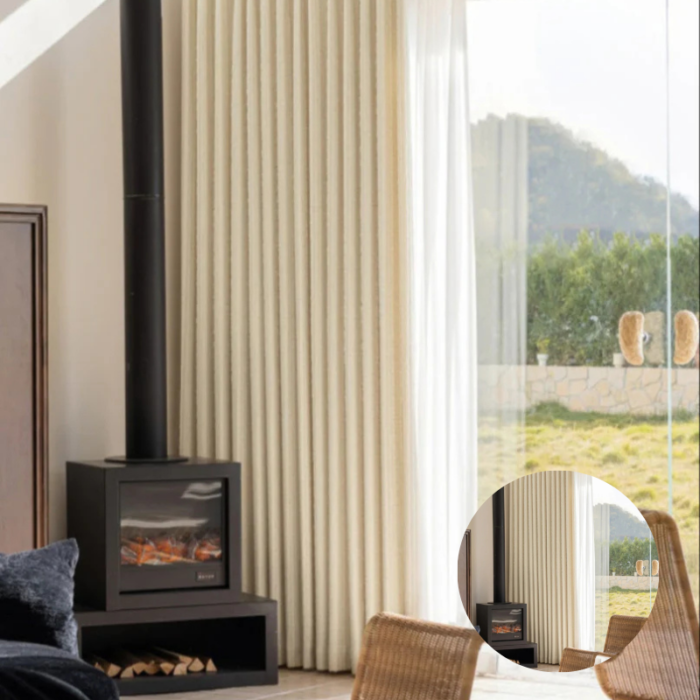
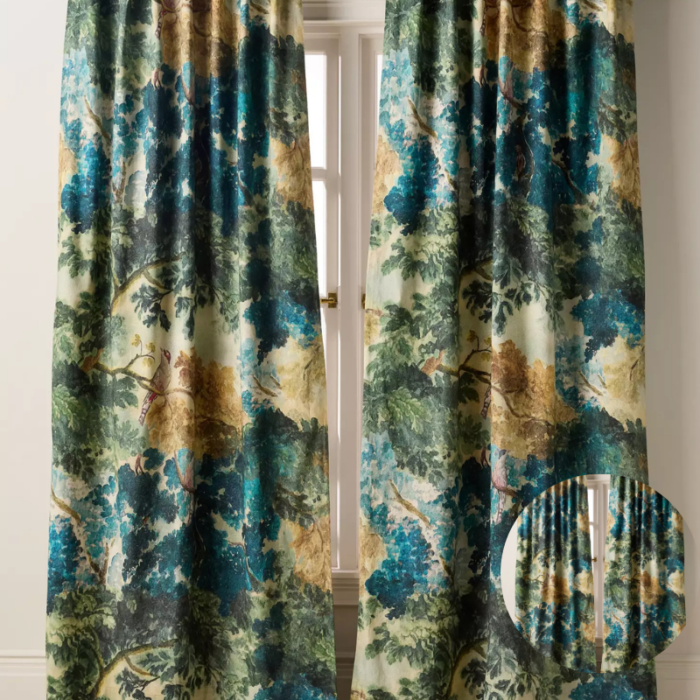
The number that matters is 300 GSM. Grams per square meter is how fabric density gets measured, and most curtains in this price bracket sit well below it, which is why they hang thin, catch on the rod, and flutter every time the heat kicks on. At 300, this velvet has enough mass to fall straight from the rod to the hem and stay there. The rod pocket header is the simplest hanging method there is: thread the rod through the sewn channel at the top and you’re done. No rings, no clips, no drilling brackets into a wall your landlord cares about. That also means the panel gathers into soft, even folds rather than the stiff, evenly-spaced pleats a grommet header forces.
Rod pocket panels need extra width to look right when closed. Plan on total panel width of about two times your rod length, otherwise the fabric pulls flat and the gathers disappear.
Rod pockets change how you style a curtain, and most people miss that. This header gathers, which means the fabric reads softer and more casual than grommet or pinch pleat, and it does not slide easily once the rod is through it. Hang it where you’ll leave it mostly closed or mostly open, not somewhere you’ll be yanking it back and forth six times a day.
Bedroom, primary. Mount the rod 5 or 6 inches above the frame and go floor length. Because the pocket hides the rod almost entirely, hardware finish matters less here than on any other header type, which is a small budget win: a plain rod works fine since you’ll only see the finials. Where you should spend attention instead is the return, meaning how far the rod extends past the window on each side. Give yourself at least 6 inches of overhang per side so the gathered panel can stack off the glass and not block your daylight when it’s open.
Guest room or a short-term rental you’re furnishing. This is the product’s sweet spot at $32. You get a heavy, expensive-looking fabric on a rod pocket that any guest can operate without instructions, and nothing is drilled permanently into the wall if you’re using a tension rod inside the frame. Velvet in a guest room also does something practical: it dampens sound through a shared wall or hallway, which matters more in a guest room than in most spaces.
Nursery, for nap schedules. Room darkening is often the right call here rather than full blackout, since a dim room still lets a baby distinguish day from night while cutting enough light for a mid-afternoon nap. The 300 GSM weight also means less fabric movement when a door opens, so the panel doesn’t swing and catch a light-sensitive kid’s eye.
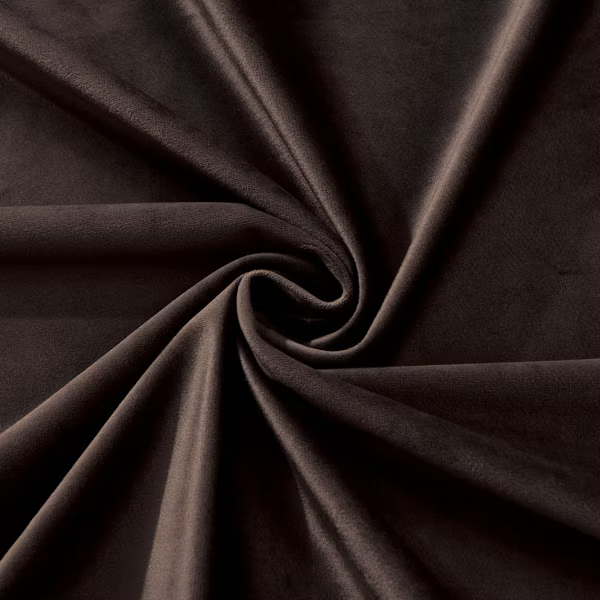
In daylight, velvet at this weight reads deep and slightly darker than it does on a screen, and the gathered rod pocket folds create their own shadow lines, which adds visible depth to the color. Under a warm bulb at night, expect it to warm up a shade. Against a warm white, greige, or soft taupe wall it looks intentional. Against cool gray drywall it can read heavy, so break it up with something warm nearby, a wood nightstand or a brass lamp base.

Velvet at 300 GSM holds water. That single fact drives most of the care advice here.
Washing. Check the label, but a heavyweight velvet panel of this type is generally fine on a cold, gentle machine cycle. Wash one panel at a time. A wet 300 GSM curtain is heavy enough to throw off a standard home washer’s balance, and an unbalanced spin cycle is how seams get stressed.
Drying. Low heat or no heat. High heat is what permanently flattens velvet pile, and unlike a wrinkle, crushed pile does not recover. Better: pull it out damp and hang it back on the rod. The weight of the wet fabric pulls its own wrinkles out as it dries, which is the easiest wrinkle removal method there is and costs nothing.
Spot cleaning. Blot with a damp cloth, moving outward from the center of the mark. Never rub velvet, since rubbing packs the pile down and leaves a shiny flat patch more noticeable than the original stain.
Shipping creases. A rod pocket panel has a built-in advantage most headers don’t. The fabric hangs from a continuous channel rather than from spaced rings or grommets, so tension distributes evenly across the full width and fold lines drop out faster. Hang it right away and give it two days before reaching for a steamer.
If you steam. Hold the head a few inches off the fabric and work down with the pile, never against it. Skip the iron entirely on velvet.
Between washes. A quick pass with a handheld vacuum on low suction every few weeks keeps dust out of the pile. Dust is what makes velvet look dull long before it’s actually dirty.
GSM is grams per square meter, a measure of fabric density. Higher GSM means more material packed into the same area. At 300, this panel is noticeably heavier than typical budget curtains, which is what lets it hang straight, block more light, and resist fluttering near a vent or drafty window.
It’s listed as room darkening. It cuts a significant amount of light and works for napping, sleeping in, and screen glare, but it isn’t marketed as 100% light elimination. If you need total darkness for shift work, look at a panel with a sewn-in blackout lining instead.
For a gathered rod pocket look, aim for total panel width around twice your rod length. One panel on a wide window will pull flat and lose the folds that make this header style look good.
Price at this tier usually reflects the finishing rather than the fabric: no sewn-in blackout liner, no lining layer, a simpler header. The face fabric weight is the part that’s genuinely substantial here.
For $32 I expected something flimsy and these are genuinely heavy. Put them in the guest room and my mother in law asked where I bought them, which never happens with anything I buy online. The rod pocket slid on fine with the basic rod I already had.